
Thursday, September 5, 2013

Tuesday, June 18, 2013
Digital Marketing Case Study – Guide to Executing your own Digital Marketing campaign
This case study shows how Hizon's Catering utilized the power of
different digital distribution channels (web, social, search and mobile)
to improve their sales performance.
More info about the campaign here: http://www.myoptimind.com/digital-marketing-case-study-guide-to-executing-your-own-digital-marketing-campaign/
More info about the campaign here: http://www.myoptimind.com/digital-marketing-case-study-guide-to-executing-your-own-digital-marketing-campaign/
Monday, June 17, 2013
Tips For Making Your Own Mobile App
Technology has been growing at an exponential rate the past
few years. If computers and software has been the norm a decade or so ago,
nowadays it’s all about mobile devices such as tablets and mobile applications.
If you have your own website, whether for personal or business use, having a
mobile application will provide many benefits to your website. It will also be
good to know that you can make your own mobile app even with little help from a mobile app developer Philippines company. Below are some tips to help
you.


- Give it for free. Before you even start planning your mobile app, remember that its chances for success are greater if you offer it for free. Make it available for free download from your website and promote your mobile app by letting your customers and clients know about it. If the expense of getting a mobile app development company is not an issue even if you make the mobile app available for free, then getting their services is not a bad idea.
- Provide a service or product with your mobile app. What is the purpose of your mobile app? Make sure that whatever feature you will offer with your mobile app is something that your customers or clients would often avail of. It can be a service or it can be a product discount or coupon. Ask yourself how a mobile app can make your customers’ lives more convenient?

- Put attention to the design and detail. Who would like an ill-designed mobile app that has many glitches? Make sure to take the time and effort to choose a design for your mobile app that is sleek and looks good. A mobile app that looks savvy and stunning can easily get your customers’ approval. Also, do not forget to test several times before distributing it for download.

- Make it simple and easy to use. Not all of those who will be downloading your mobile app are tech savvy, so it is very important to make sure that those who are on the lowest level of tech know-how will be able to figure out how to use your mobile app.

- Have it available in different platforms. Although you will definitely start out in a single platform, it is better to expand into other platforms once you have a mobile app up and running. This will provide you with the flexibility to offer your mobile app to any customer no matter what mobile device and platform he or she uses.

Wednesday, April 3, 2013
Guide To Push Digital Marketing
Digital marketing is on the rise in the past few years,
along with the rise of the use of electronic devices. Whether through
computers, mobile phones, tablets, or game consoles, more and more people are
relying on these devices for browsing the Internet, accessing information, and
playing various media. Because of the increased time spent on these electronic
devices, it is inevitable that companies would turn to digital media to market
their products and services.


Because of the need for digital marketing in the Philippines, many marketing companies have ventured into
this field as well. New companies that offer only digital marketing have also
sprouted up and it can be quite easy to find a digital marketing company if you have a need for their services.
Digital marketing has two forms or approaches – pull digital
marketing and push digital marketing. This article will focus on the more
aggressive approach, push digital marketing.
What is push digital marketing?
Push digital marketing, as the name suggests, is a form of
digital marketing wherein the marketer pushes
a marketing material towards the target audience. With this approach, the
recipient often does not provide permission or consent for the marketer to make
the marketing material available.

What are the different forms of using push digital marketing?
Some examples of forms of push digital marketing are emails,
text messages, online messages, and newsletters. Email marketing is among the
most popular forms of push digital marketing. Because of the nature of these
forms of digital marketing, they are also often categorized as spam.
What are the advantages and disadvantages of push digital marketing?
Push digital marketing is a more aggressive form of digital
marketing compared to pull digital marketing because you deliver the
information directly to your target consumers. One advantage of push digital
marketing is that it provides you with the opportunity to send a more
personalized message to your customers. However, this also makes it more
tedious to implement. Also, with push digital marketing, you need to have a
specific group of potential customers. You need to have specific information
such as a list of email addresses or mobile phone numbers for you to pursue
this form of digital marketing.
This approach is often used to promote new products and
services because it involves pushing new information towards the target market.
Compared to pull digital marketing, push digital marketing is more focused and
driven.
Sunday, March 10, 2013
Mobile Marketing: How To Market Your Mobile Website
We’re
nearing the end of the series about Mobile Web Development, Optimization and
Marketing. On the previous posts, we discussed the four (4) different ways to reach your mobile consumer and
analyzed their pros and cons. Last time, we introduced optimization techniques
on how to make your existing website mobile-friendly. On this fifth installment, learn the basics of SEO and
marketing strategies should you choose to have a separate site intended for
mobile consumers.
Mobile Website and Marketing.
Mobile Website Defined.
This is the
second copy of your main site. Your visitors are directed to it if they’re
using a handheld or tablet device. It displays only pertinent information and
is designed with larger navigation and special features like click-to-call
functions all aimed to give your audience the best mobile user experience.
Mobile Website and SEO.
As users
hate to scroll through a page when they’re using their smartphones, it is
extremely important to be on the top of the list should a prospective mobile
client decide to search for a certain service your company happens to offer.
Thus, here are three (3) simple tips to help you rank better on mobile search
engines.
·
Onpage. Similar to web, optimize your
title, meta and tags with the right keywords. During keyword research, consider
the behavior of mobile users as they totally differ from the web users – factor
such as the earlier tends to type fewer words than the latter.
·
Mobile Standards. Just like your usual Googlebot task,
it indexes the XHTML and CSS files of your mobile website. Make sure that you
upload the correct copy accordingly.
·
Redirection and Sitemap. Test to see if redirection works
properly in different gadgets. You wouldn’t want to lose a potential buyer by
merely failing to direct them to the right version of your website. Add a
mobile sitemap for mobile robots.
Mobile Website and Marketing.
Modifying
your site to increase ranking on mobile search engines isn’t enough. What about
the people who use local directories to look for a recommended restaurant or
dry cleaning shop near the area. Then enters marketing. Below are ideas on how
to approach this type of crowd:
·
Online coupons. Mobile people most often than not prefers
local. Hence, if your firm is located in the country, have a webdesign professional in the Philippines create online
coupons to generate sales for your business. This is a great opportunity to
maximize purchases that can be done in impulse.
·
Listings. If you’re a local resto that offers
exotic Pinoy cuisine, have an SEO company in the Philippines submit your
listing to a local food directory. In this way, you can get leads that are
targeted according to your niche.
·
Reviews. Have your satisfied customers write
a review for you. Let the word about your excellent products and services go
out.
·
Social Media Promotions. Utilize the social media hype. Add
your business in Foursquare for better visibility. Reward regulars with
freebies for frequently checking in.
·
QR Codes. Your customer can reach your
website by simply scanning your QR codes found online and on print. So remember
include this in your marketing plans as well.
Next up is how to market your mobile app.
Wednesday, March 6, 2013
Mobile Web Development: Mobile Site vs Mobile App
MobileWeb Usage Statistics.
based
on Westminster
eForum, March 2012 and Pew Research Center
- A sale coming from mobile phones on eBay comes every 2 seconds.
- Smartphone sales have become bigger than PC sales.
- Tablet sales are expected to exceed 100 million by the end of the year.
- 28% of Internet usage comes from a mobile phone.
- 86% of adults own a cellphone and 53% use it to access the Internet.
With the above stats, are you and your business prepared for
the explosion of the mobile web? In this series, we already tackled four (4) ways to reach your mobileconsumers as well as the advantagesof Responsive Design over Mobile website
(and vice versa). On this post, let’s see which between the two, by going
through their features, would be the best solution to your business needs –
would it be a mobile website or a mobile application?
When
to use a Mobile Website.
As mobile websites were strategically designed for
smartphones and not desktop PCs, they have been made efficient to show only the
most relevant information compared to the full web version. Thus, they are
mainly the effective choice if Analytics show that majority of the visits come
from mobile devices.
When
to use Mobile Apps.
Since mobile applications are stand-alone software aimed for
a specific purpose, they normally direct the people to their own compact form
of a browser for additional details. The apps then get the content from its
server so that the downloader can retrieve it anytime. They are the best option
if the target audience uses a tool regularly (like Evernote).
Here are ten (10) more factors that illustrate how they
differ from each other.
1.
Ease
of Access
·
Mobile
site: may be accessed only when online
·
Mobile
apps: may be accessed even when offline
2.
Availability
of Content
·
Mobile
site: instantly available since content may be viewed via browser
·
Mobile
apps: available only after apps has been downloaded from the marketplace
and installed on the gadget
3.
Ability
to be searchable
·
Mobile
site: easier to find because search engines have a distinct mobile
search index similar to web’s
·
Mobile
apps: harder to find as it all depends if the apps exists on the
app store of manufacturer
4.
Ability
to be shareable
·
Mobile
site: easy to share, it takes only one click. It’s like sharing a
regular web link, only it’s done on mobile
·
Mobile
app: harder to share as the person either has to go to the
marketplace first or download another app to enable sharing
5.
Compatibility
·
Mobile
site: compatible to all device types – smartphones, tablets
·
Mobile
apps: solely depends on the device. There are apps that might
work on Apple but wouldn’t work on Android or Blackberry
6.
Integration
Feature.
·
Mobile
site: can integrate with existing technologies such as QR codes
or SMS
·
Mobile
apps: can integrate in terms of built-in features like camera or
processing power
7.
Administrative
User Control and Permission
·
Mobile
site: the user has no authorization to the site except to “Read”.
Complete control goes to the webmaster
·
Mobile
apps: the user has the absolute authority to do anything he likes
with the app. He can run it, retain or opt to delete it. He has “Read, Write
and Execute” permission.
8.
Update
and Maintenance
·
Mobile
site: easy to update and maintain on the developers end. If the
site is local and the layout needs to be changed, a web design expert in the Philippines
can effortlessly do the work.
·
Mobile
apps: hard to update and maintain due to its long procedure to do
so. If the app is locally-made, the assigned iOS developer in the Philippines,
will initially perform the update and compatibility debugging. Once tested, he
will upload it along with documentation about the latest revision. The user
will then transfer and install the newest copy on his phone.
9.
Cost
and Affordability
·
Mobile
site: more affordable due to updates and maintenance
·
Mobile
apps: less affordable for the same reason
10. Best suited for:
·
Mobile
site: Ecommerce websites. The simple step-by-step instructions
will guide prospective buyer to a simpler process of purchase
·
Mobile
app: Interactive games
On the next post, discover techniques on how to optimize your current site tomake it mobile-friendly.
Friday, January 18, 2013
Learning about Limitations of SEO
SEO or Search Engine Optimization is considered as one of the most effective Internet Marketing techniques used by many web masters today. The reason why is because of its effectiveness in increasing the quality and quantity of traffic in a website which leads to higher conversion rate.
In addition to that, SEO is also able to target its specific market through personalized marketing which is only possible through search engines.
However, though SEO is considered today as one of the most successful and the most powerful, its success is only limited on how well the website was constructed.

Limitations of SEO
According to many seo philippines experts, SEO is used mainly to increase a website’s visibility in the World Wide Web market by making the highest relevant answer to a search query, allowing these websites to appear in the first top 10 SERP or search engine result page.
However, its effectiveness it’s usually limited to only increasing a website’s visitor, and not the website’s conversion rate. This is the reason why SEO is usually offered with a redesign of a website so as to fully utilize SEO’s effectiveness in web marketing.
On-Page SEO Optimization
On-Page SEO Optimization, or on-page optimization, is a process in SEO which deals with the improvement of the website to make it more “search engine friendly.” This is by increasing the website’s keyword density.
According to many affordable seo services experts, there are many ways on how to increase a website’s keyword density, such as through its coding, such as the website’s Meta Tags including the Meta Title (the title of the page), the Meta Description (the description of the page), and Meta Keywords (the keywords of the page).
In addition to those, the Alt Tags and Title Tags are also popular places where SEO experts can increase a website’s keyword density, as well as with its URL and links. On-Page SEO also involves changing an image’s file name.
But other than on the website’s coding, on-page SEO also involves changing the website’s content. Not only does this improve the website’s keyword density, but also improves the website’s authority in the World Wide Web by sharing information that can be useful for many people. This is also used in a popular SEO technique called link bait.
Source: http://www.amazines.com/article_detail.cfm/4425650?articleid=4425650&title=SEO%2CPhilippines%2Caffordable%2Cseo%2Cservices
In addition to that, SEO is also able to target its specific market through personalized marketing which is only possible through search engines.
However, though SEO is considered today as one of the most successful and the most powerful, its success is only limited on how well the website was constructed.

According to many seo philippines experts, SEO is used mainly to increase a website’s visibility in the World Wide Web market by making the highest relevant answer to a search query, allowing these websites to appear in the first top 10 SERP or search engine result page.
However, its effectiveness it’s usually limited to only increasing a website’s visitor, and not the website’s conversion rate. This is the reason why SEO is usually offered with a redesign of a website so as to fully utilize SEO’s effectiveness in web marketing.
On-Page SEO Optimization
On-Page SEO Optimization, or on-page optimization, is a process in SEO which deals with the improvement of the website to make it more “search engine friendly.” This is by increasing the website’s keyword density.
According to many affordable seo services experts, there are many ways on how to increase a website’s keyword density, such as through its coding, such as the website’s Meta Tags including the Meta Title (the title of the page), the Meta Description (the description of the page), and Meta Keywords (the keywords of the page).
In addition to those, the Alt Tags and Title Tags are also popular places where SEO experts can increase a website’s keyword density, as well as with its URL and links. On-Page SEO also involves changing an image’s file name.
But other than on the website’s coding, on-page SEO also involves changing the website’s content. Not only does this improve the website’s keyword density, but also improves the website’s authority in the World Wide Web by sharing information that can be useful for many people. This is also used in a popular SEO technique called link bait.
Source: http://www.amazines.com/article_detail.cfm/4425650?articleid=4425650&title=SEO%2CPhilippines%2Caffordable%2Cseo%2Cservices
Thursday, December 6, 2012
Evolution of the Ecommerce Websites
Ecommerce websites have become a popular trend in the World Wide Web ever since the dotcom boom. Today, ecommerce websites are still known as one of the most popular forms of websites in the World Wide Web. And since its first use, ecommerce websites are now more popularly known as online shops.
Ecommerce Website Development
Ecommerce websites are known as one of the most complicated websites that any web developers have ever encountered. The reason why is because of its back-end programming as well as server-side scripting languages, such as PHP and ASP. In addition to that, the demand for ecommerce web designer had also grown.
Other than the development stage, there is also the cost of maintaining an ecommerce website. Updating products and services requires the skills of a professional web developer or a web design services Philippines when it comes to changing their website’s design and layout.
However, there is a tool today that can be used to allow people with little knowledge in web development and design to edit their website’s content as well as products just as easily. This is when ecommerce web applications became a popular trend in the World Wide Web Market.
Ecommerce Web Application
Ecommerce web applications, such as Magento, had become a popular tool in web development. Not only did these kinds of tools made it easier for web developers to maintain an ecommerce website, but also made it easier for owners to make changes within their website’s services and products themselves without the supervision of a professional web developer.
Magento is an open source ecommerce web application that was launched on March 31, 2008. There are three different Magentos available today, the community edition, which is the free edition, the professional edition, and the enterprise edition.

osCommerce
osCommerce (“open source Commerce”) is an e-commerce and online store-management software program. It can be used on any web server that has PHP and MySQL installed. It is available as free software under the GNU General Public License.

PrestaShop
PrestaShop is an e-commerce solution which is free and open source. It supports payment gateways such as Google Checkout, Authorize.net, Skrill, PayPal and Payments Pro via API. Further payment modules are offered commercially.

Ecommerce Website Development
Ecommerce websites are known as one of the most complicated websites that any web developers have ever encountered. The reason why is because of its back-end programming as well as server-side scripting languages, such as PHP and ASP. In addition to that, the demand for ecommerce web designer had also grown.
Other than the development stage, there is also the cost of maintaining an ecommerce website. Updating products and services requires the skills of a professional web developer or a web design services Philippines when it comes to changing their website’s design and layout.
However, there is a tool today that can be used to allow people with little knowledge in web development and design to edit their website’s content as well as products just as easily. This is when ecommerce web applications became a popular trend in the World Wide Web Market.
Ecommerce Web Application
Ecommerce web applications, such as Magento, had become a popular tool in web development. Not only did these kinds of tools made it easier for web developers to maintain an ecommerce website, but also made it easier for owners to make changes within their website’s services and products themselves without the supervision of a professional web developer.
There are many of these kinds of tools that are currently used today; some of the most popular are as follows:
MagentoMagento is an open source ecommerce web application that was launched on March 31, 2008. There are three different Magentos available today, the community edition, which is the free edition, the professional edition, and the enterprise edition.

osCommerce
osCommerce (“open source Commerce”) is an e-commerce and online store-management software program. It can be used on any web server that has PHP and MySQL installed. It is available as free software under the GNU General Public License.

PrestaShop
PrestaShop is an e-commerce solution which is free and open source. It supports payment gateways such as Google Checkout, Authorize.net, Skrill, PayPal and Payments Pro via API. Further payment modules are offered commercially.

Tuesday, November 20, 2012
What is Progressive Enhancement?
There are many popular methodologies or practices developed in web designing. One of the most popular today is the Progressive Enhancement methodology, which is still widely practiced in the web development industry.
What is Progressive Enhancement?
Progressive enhancement, or PE, is a strategy for web design that emphasizes accessibility, semantic HTML markup, and external stylesheet and scripting technologies. Progressive enhancement uses web technologies in a layered fashion that allows everyone to access the basic content and functionality of a web page, using any browser or Internet connection, while also providing an enhanced version of the page to those with more advanced browser software or better bandwidth.

Principles Behind Progressive Enhancement or PE
According to many web experts offering some of the best web design services, Progressive Enhancement consists of the following core principles: (1) basic content should be accessible to all web browsers, (2) basic functionality should be accessible to all web browsers, (3) sparse, semantic markup contains all content, (4) enhanced layout is provided by externally linked CSS, enhanced behavior is provided by unobtrusive, externally linked JavaScript, and (5) end-user web browser preferences are respected.

Benefits of Progressive Enhancement or PE
Web pages created according to the principles of PE are by their nature more accessible, because the strategy demands that basic content always be available, not obstructed by commonly unsupported or easily disabled scripting.
Additionally, According to many web experts offering some of the best Philippine web design, the sparse markup principle makes it easier for tools that read content aloud to find that content. It is unclear as to how well PE sites work with older tools designed to deal with table layouts, "tag soup," and the like.
Benefits in SEO or Search Engine Optimization
Improved results with respect to search engine optimization are another side effect of a PE-based Web design strategy. Because the basic content is always accessible to search engine spiders, pages built with PE methods avoid problems that may hinder search engine indexing.

Criticism
Some skeptics, such as Garret Dimon, have expressed their concern that PE is not workable in situations that rely heavily on JavaScript to achieve certain user interface presentations or behaviors.
Others have countered with the point that informational pages should be coded using PE in order to be indexed by spiders, and that even Flash-heavy pages should be coded using PE.
In a related area, many have expressed their doubts concerning the principle of the separation of content and presentation in absolute terms, pushing instead for a realistic recognition that the two are inextricably linked.
Source...
What is Progressive Enhancement?
Progressive enhancement, or PE, is a strategy for web design that emphasizes accessibility, semantic HTML markup, and external stylesheet and scripting technologies. Progressive enhancement uses web technologies in a layered fashion that allows everyone to access the basic content and functionality of a web page, using any browser or Internet connection, while also providing an enhanced version of the page to those with more advanced browser software or better bandwidth.

According to many web experts offering some of the best web design services, Progressive Enhancement consists of the following core principles: (1) basic content should be accessible to all web browsers, (2) basic functionality should be accessible to all web browsers, (3) sparse, semantic markup contains all content, (4) enhanced layout is provided by externally linked CSS, enhanced behavior is provided by unobtrusive, externally linked JavaScript, and (5) end-user web browser preferences are respected.

Web pages created according to the principles of PE are by their nature more accessible, because the strategy demands that basic content always be available, not obstructed by commonly unsupported or easily disabled scripting.
Additionally, According to many web experts offering some of the best Philippine web design, the sparse markup principle makes it easier for tools that read content aloud to find that content. It is unclear as to how well PE sites work with older tools designed to deal with table layouts, "tag soup," and the like.
Benefits in SEO or Search Engine Optimization
Improved results with respect to search engine optimization are another side effect of a PE-based Web design strategy. Because the basic content is always accessible to search engine spiders, pages built with PE methods avoid problems that may hinder search engine indexing.
Some skeptics, such as Garret Dimon, have expressed their concern that PE is not workable in situations that rely heavily on JavaScript to achieve certain user interface presentations or behaviors.
Others have countered with the point that informational pages should be coded using PE in order to be indexed by spiders, and that even Flash-heavy pages should be coded using PE.
In a related area, many have expressed their doubts concerning the principle of the separation of content and presentation in absolute terms, pushing instead for a realistic recognition that the two are inextricably linked.
Source...
Monday, October 8, 2012
A Look at PHP Accelerators
One of today’s most popular server-side scripting languages that many web programmers use in web development is PHP. And there are many reasons why many had preferred the use of PHP rather than the use of other types of server-side scripting languages, such as Microsoft’s ASP. These reasons include the PHP accelerator.
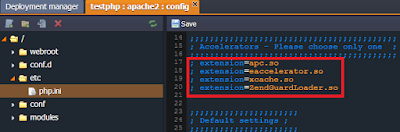
What is a PHP Accelerator?
A PHP accelerator is a PHP extension designed to improve the performance of software applications written in the PHP programming language.
According to many php developers experts, most PHP accelerators work by caching the compiled bytecode of PHP scripts to avoid the overhead of parsing and compiling source code on each request (some or even most of which may never be executed). To further improve performance, the cached code is stored in shared memory and directly executed from there, minimizing the amount of slow disk reads and memory copying at runtime.
Advantages PHP accelerators can substantially increase the speed of PHP applications. Improvements of web page generation throughput by factors of 2 to 7 have been observed.
The effect on application performance of opcode caching varies widely, depending on factors such as the inherent execution time of the PHP application and the percentage of source code actually executed on a given request, and whether additional optimization steps are performed.
According to many web developer Philippines experts, while a code optimizer may even slow down overall performance when used in isolation, it can provide an additional performance boost when coupled with a bytecode cache, as the optimization effort is performed just once.
A Popular Example of PHP Accelerator
eAccelerator is a PHP accelerator derived from the MMCache extension for the PHP programming language. eAccelerator provides a bytecode cache. eAccelerator is open source and thereby free to use and distribute. Old and unmaintained versions also provided an encoder.
Every time a PHP script is accessed, PHP usually parses and compiles scripts to bytecode. Once installed, eAccelerator optimizes the compiled bytecode and caches this to shared memory or disk or both. Upon subsequent accesses to a script, eAccelerator will access cached bytecode if it is available instead of the script being compiled. This avoids the performance overhead of repeated parsing and compilation.
Previous eAccelerator versions also provided functions for use in PHP scripts that allow access to shared memory, automatic web (content) caching, and other related tasks. These were removed as of version 0.9.6rc1.
Old eAccelerator versions had an encoder component that creates a file that cannot be as easily read as a normal PHP script, offering some code protection. A dedicated extension named eLoader is available to process such encoded scripts if the eAccelerator extension is not desired. This functionality has been removed from the current developer version and will not be part of the next release.
Source:

What is a PHP Accelerator?
A PHP accelerator is a PHP extension designed to improve the performance of software applications written in the PHP programming language.
According to many php developers experts, most PHP accelerators work by caching the compiled bytecode of PHP scripts to avoid the overhead of parsing and compiling source code on each request (some or even most of which may never be executed). To further improve performance, the cached code is stored in shared memory and directly executed from there, minimizing the amount of slow disk reads and memory copying at runtime.
Advantages PHP accelerators can substantially increase the speed of PHP applications. Improvements of web page generation throughput by factors of 2 to 7 have been observed.
The effect on application performance of opcode caching varies widely, depending on factors such as the inherent execution time of the PHP application and the percentage of source code actually executed on a given request, and whether additional optimization steps are performed.
According to many web developer Philippines experts, while a code optimizer may even slow down overall performance when used in isolation, it can provide an additional performance boost when coupled with a bytecode cache, as the optimization effort is performed just once.
A Popular Example of PHP Accelerator
eAccelerator is a PHP accelerator derived from the MMCache extension for the PHP programming language. eAccelerator provides a bytecode cache. eAccelerator is open source and thereby free to use and distribute. Old and unmaintained versions also provided an encoder.
Every time a PHP script is accessed, PHP usually parses and compiles scripts to bytecode. Once installed, eAccelerator optimizes the compiled bytecode and caches this to shared memory or disk or both. Upon subsequent accesses to a script, eAccelerator will access cached bytecode if it is available instead of the script being compiled. This avoids the performance overhead of repeated parsing and compilation.
Previous eAccelerator versions also provided functions for use in PHP scripts that allow access to shared memory, automatic web (content) caching, and other related tasks. These were removed as of version 0.9.6rc1.
Old eAccelerator versions had an encoder component that creates a file that cannot be as easily read as a normal PHP script, offering some code protection. A dedicated extension named eLoader is available to process such encoded scripts if the eAccelerator extension is not desired. This functionality has been removed from the current developer version and will not be part of the next release.
Source:
Subscribe to:
Posts (Atom)